 English English
This product is a homogeneous waterproof sheet made from ECB resin as the raw material, with various additives such as reinforcing agents, antioxidants, and aging agents. It is manufactured through a process of heating and melting, plasticization, extrusion, and calendering and cooling. Geotextile straps can also be bonded to its surface to create a homogeneous waterproof sheet with integrated straps, which is primarily used in tunnel waterproofing projects.
Thickness: 0.5 mm or greater;
Width: 1.0 m, 1.2 m, 1.5 m, 2.0 m, 2.5 m, 3.0 m;
Length: 20 meters or more.
Code Marker
JS3—Resin-based ECB homogeneous sheets; ECB—ethylene-vinyl acetate modified asphalt copolymer.
Products are marked in the following order: type code, material (abbreviation or code), and dimensions (length × width × thickness).
Example: An ethylene-vinyl acetate (ECB) modified asphalt copolymer resin sheet with a length of 20.0 m, a width of 1.0 m, and a thickness of 1.5 mm is labeled as: J S3-ECB-20.0 m × 1.0 m × 1.5 mm.
Construction Methods
Applications
Suitable for waterproofing and seepage prevention projects in tunnels, subways, bridges, landscaping, water features, and artificial landfills.
Packaging, Storage, and Transportation
Performance Metrics
Applicable standard: GB/T 18173.1-2012 "Polymer Waterproofing Materials—Part 1: Sheets."
| No. | Project | Indicators |
| 1 | Tensile Strength (at Room Temperature)/MPa ≥ | 14 |
| 2 | Elongation at break (at room temperature)/% ≥ | 500 |
| 3 | Tear strength/(K/m) ≥ | 60 |
| 4 | Water Impermeability/30 min | 0.3 MPa, no leaks |
| 5 | Low-Temperature Bending | -35°C, no cracks |
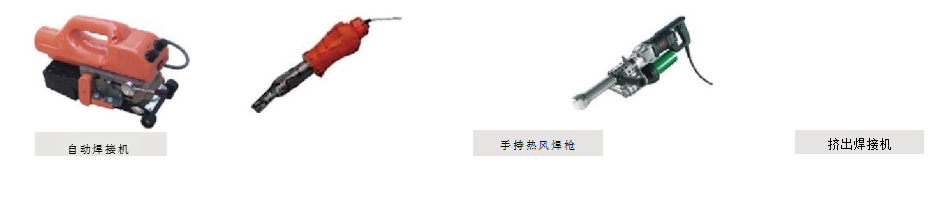
The hot-air welding method is used. The mechanical crawling welding method is used for large-area installation, the hot-air welding method for detailed work, and the extrusion welding method for localized repairs. In tunnel and subway projects, the “sling method” is commonly used: two rolls of membrane are aligned along their longitudinal edges, suspended at a fixed position, and then welded along the longitudinal direction, starting from one end.
Key Construction Points: